
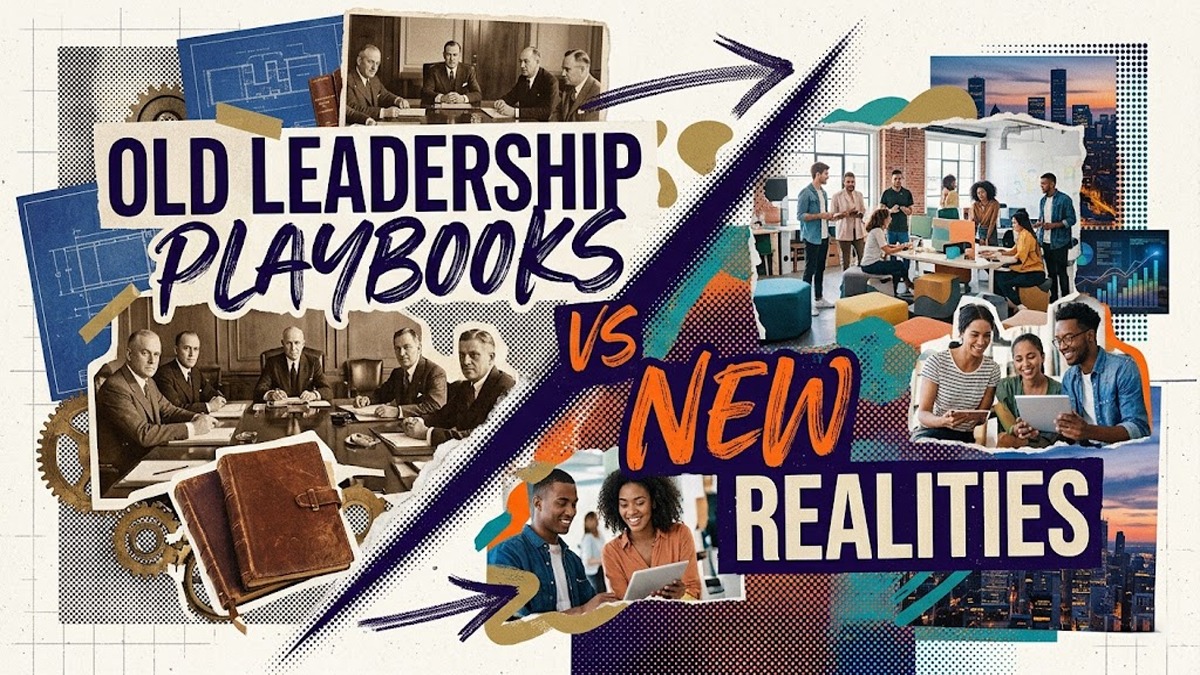
Leadership books shaped generations of managers, founders and executives. They sat on corner office shelves, got dog-eared on long flights and were handed down like gospel from mentor to mentee. But the world these books were written for has changed dramatically. Remote teams, AI-driven workplaces, Gen Z employees and post-pandemic culture have rewritten the rules of what good leadership actually looks like.
So which classic leadership books still hold up in 2026? And which ones need to be retired or at least read with serious skepticism?
Here is an honest breakdown.
1 “Good to Great” by Jim Collins — Partially Applies
Jim Collins spent years studying what separated good companies from truly great ones. His findings around disciplined thinking long-term vision and the famous hedgehog concept remain genuinely useful.
What does not hold up is the assumption that greatness is permanent. Several companies that Collins celebrated have since struggled or collapsed entirely. In 2026 the pace of disruption means no company can afford to think it has “arrived.” The lesson is still worth learning. The confidence that comes with it is not.
2 “The 7 Habits of Highly Effective People” by Stephen Covey – Still Solid
Few books have aged as well as this one. Covey’s principles around proactive thinking, win-win relationships and sharpening the saw feel almost more relevant today than when they were written in 1989.
In a world of constant distraction and reactive decision-making Covey’s framework offers something rare: a slow and intentional approach to leadership. The habits he describes are not trendy. That is precisely why they work.
3 “In Search of Excellence” by Tom Peters — Mostly Outdated
This 1982 classic celebrated a set of American companies as models of excellence. Within a decade many of those same companies had stumbled badly. The book’s core message about staying close to customers and empowering people still has merit.
But the leadership culture it celebrated was deeply hierarchical and largely built around a command-and-control model. In 2026 that model does not just underperform. It actively drives talent away.
4 “Leaders” by Warren Bennis and Burt Nanus — Selectively Useful
Published in 1985 this book introduced ideas around vision trust and meaning in leadership that were genuinely ahead of their time. The emphasis on communicating a compelling vision and creating alignment around purpose reads as remarkably modern.
Where it falls short is in its treatment of leadership as something that flows from a single powerful individual downward. Today’s best organisations distribute leadership across teams. The lone visionary at the top is more myth than model.
5 “How to Win Friends and Influence People” by Dale Carnegie – Still Applies
Written in 1936 this book should feel ancient. It does not. Carnegie’s core insight that people respond to being genuinely heard valued and appreciated is as true in a Slack message as it was in a boardroom handshake.
If anything, the rise of remote work and digital communication has made Carnegie’s principles more urgent. Leaders who forget to make people feel seen and respected do not just lose influence. They lose their teams.
6 “The Prince” by Machiavelli – Handle With Care
Few texts have been more misused in leadership circles than this one. Yes Machiavelli offers sharp thinking about power strategy and political reality. Some founders quietly swear by it.
But building a team culture around fear and calculated manipulation does not scale. It creates toxic environments high turnover and eventual collapse. The parts about reading power dynamics and anticipating opposition are worth studying. The rest should stay in the philosophy department.
7 “On Becoming a Leader” by Warren Bennis – Quietly Timeless
Less cited than his other work this book from 1989 focuses on self-knowledge as the foundation of leadership. Bennis argued that leaders are made not born and that the journey inward is as important as any external strategy.
In 2026 with burnout at record levels and founder mental health finally becoming a serious conversation this book feels startlingly relevant. Knowing yourself knowing your values and knowing your limits is not soft leadership. It is the foundation of sustainable leadership.
8 “Execution” by Larry Bossidy and Ram Charan — Still Relevant but Needs Updating
This book made a powerful case that strategy without execution is just wishful thinking. That argument holds completely. The gap between a great idea and a great outcome is almost always an execution problem.
What feels dated is the book’s top-down approach to driving execution. In 2026 execution happens through empowered teams psychological safety and clear systems. Not through pressure from above.
9 “The Effective Executive” by Peter Drucker – Remarkably Timeless
Drucker wrote this in 1967 and somehow it reads like it was written last year. His focus on managing time making decisions based on contribution and doing first things first speaks directly to every overwhelmed founder and senior leader in 2026.
Drucker understood something most modern productivity culture misses entirely. Effectiveness is not about doing more. It is about doing the right things. In an age of infinite distraction that is the most valuable leadership lesson of all.
10 “Radical Candor” by Kim Scott – Built for Right Now
Not quite a classic yet but already widely influential. Kim Scott’s framework of caring personally while challenging directly fills a gap that older leadership books completely ignored. How do you give honest feedback without being brutal? How do you build cultures where truth-telling is safe?
These are not abstract questions in 2026. They are daily operational challenges for every team leader managing hybrid teams across time zones and generations.
The Bottom Line
Classic leadership books are not worthless. Many contain insights that no algorithm or AI tool will ever replace. But they were written in a different world for a different kind of organisation led by a different kind of leader.
The smartest approach in 2026 is not to throw out the old playbooks entirely. It is to read them critically. Take what still applies. Discard what belongs to a world that no longer exists. And always ask the most important question a leader can ask.